
Optimism, an Ethereum Layer 2 network, is shifting its playbook to give enterprises more control over their own chains. The move comes after CEO Jing Wang said the project needs a tighter strategy amid falling usage and stronger competition.
In a post on X on Nov. 27, Wang acknowledged that Optimism spread itself thin supporting partner networks and "did too much and focused too little." She hinted that future efforts will center on letting businesses own their economic design — things like fees and revenue — rather than simply launching new networks on Optimism's tech.
"At the end of the day, enterprises want to control their own economics. They aren't gonna be sharecroppers on Stripe's blockchain," Wang wrote.
The new direction: more control for businesses
For years, Optimism's OP Stack — a software kit for building blockchains — powered networks such as Coinbase's Base and Kraken's Ink. That approach made it easy to spin up chains that stay compatible with Ethereum. The next phase, Wang suggested, is about control: letting enterprise customers shape how their chains charge fees, share revenue, and upgrade their systems.
Think of it like moving from renting to owning. Instead of relying on a one-size-fits-all setup, companies could choose their own settings and capture more of the value their networks generate.
Why the shift now
Wang said Optimism over-hired and lacked a coherent plan as market conditions changed. The team has since cut costs and consolidated groups under one umbrella. Meanwhile, rivals such as Solana and Stripe-backed Tempo are crowding the field with low fees and simple user experiences.
By the numbers
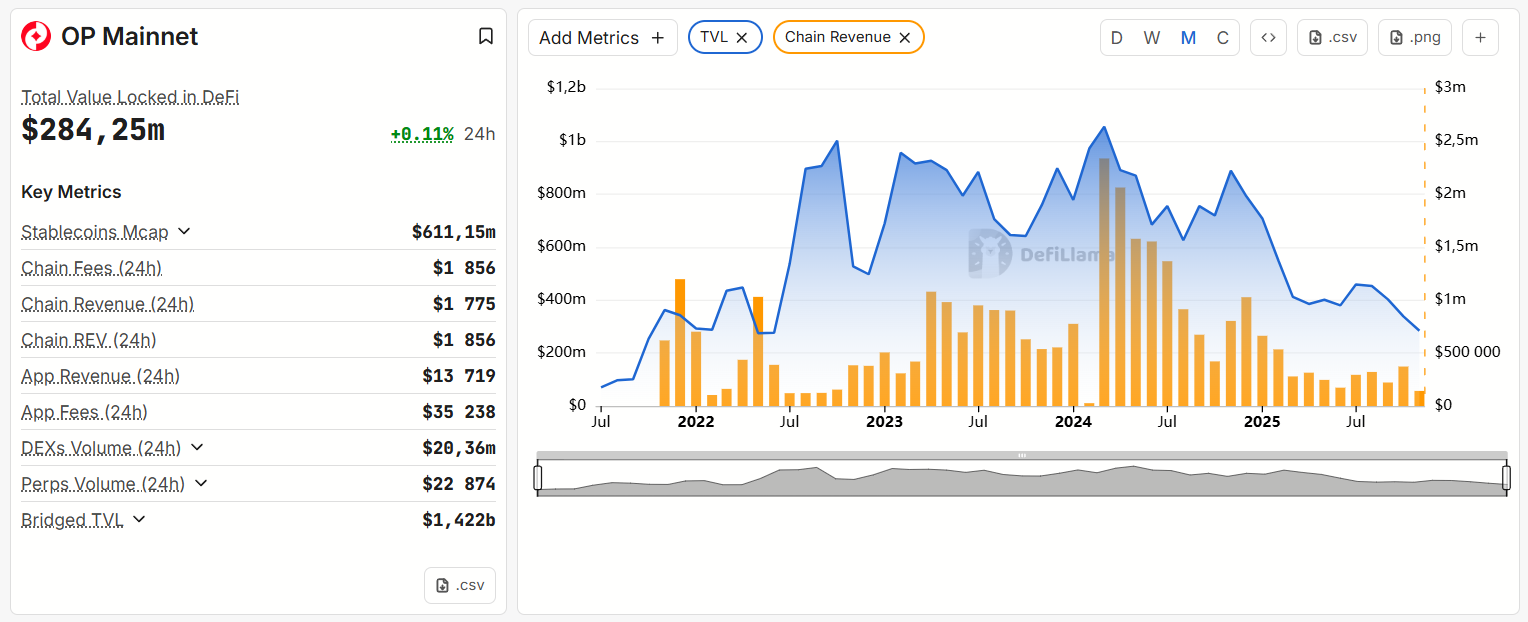
Key metrics on Optimism have been sliding:
- Total value locked (TVL) — the crypto deposited in apps on a chain — has dropped back to 2022 levels, according to DefiLlama.
- Monthly on-chain revenue fell from about $2.3 million in March 2024 to roughly $373,000 in October. One driver: Optimism's Ecotone upgrade in Q1 2024 cut average transaction fees by around 90%.
- The OP token is under pressure, down more than 85% over the past year and more than 90% from its all-time high.
What this could look like for enterprises
Details are still scarce, but "control over economics" typically includes:
- Setting fee policies and keeping more of the revenue they generate.
- Choosing how upgrades are approved and rolled out.
- Picking data and infrastructure options that match compliance needs.
For a payments company or an exchange, predictable fees and clear revenue capture can be the difference between piloting a network and committing for the long run.
Competition is heating up
Solana's single-chain design and low costs have attracted developers looking for speed and simplicity. New entrants like Tempo, backed by Stripe, are also targeting mainstream business use cases. Optimism's answer appears to be an enterprise-focused model where customers tailor the economics of their own chains while staying plugged into Ethereum's ecosystem.
Why it matters
- For investors: A clearer business model could stabilize revenue after fee cuts reduced income.
- For builders: More control may draw larger brands that want custom rules and predictable costs.
- For users: If enterprises shoulder more of the costs, apps could stay cheap to use without starving networks of funding.
What to watch next
- Product specifics: How much control will enterprises really get over fees, upgrades, and chain governance?
- Pricing and support: Will Optimism offer service-level agreements or dedicated tooling for corporate clients?
- Network impact: Whether TVL, active users, and developer activity rebound as the new strategy rolls out.
Bottom line: Optimism is moving from helping anyone launch a chain to helping businesses run one on their own terms. If the execution matches the promise, the network could turn a tough year into a more durable model for Ethereum-compatible scaling.