
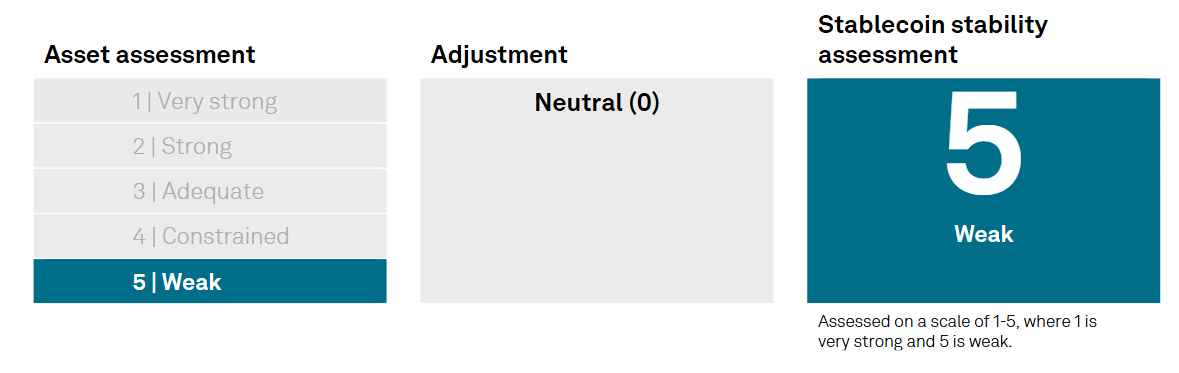
Tethers USDT just received the lowest stability score from S&P Global Ratings, triggering a sharp rebuttal from CEO Paolo Ardoinobut little market panic. The agency cut its assessment from 4 to 5, the weakest level in its framework for stablecoins designed to hold a $1 price.
What changed in S&Ps view
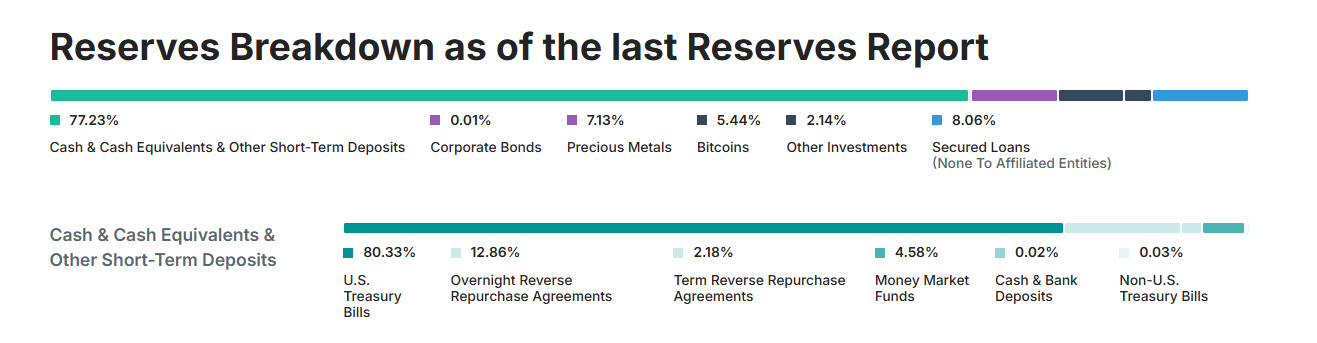
S&P said the downgrade stems from a larger slice of "higher-risk" assets in USDTs reserves. The firm estimated that these riskier holdings rose to 24% from 17% a year ago, and highlighted Bitcoin, gold and other precious metals, corporate bonds, secured loans, and other investments as examples that come with limited disclosures and credit or foreign-exchange risks.
The report also flagged Bitcoin exposure: S&P said BTC is now about 5.6% of USDT in circulation. That exceeds USDTs 3.9% overcollateralization marginthe cushion above outstanding tokensmeaning a sharp Bitcoin drop could push reserves below whats needed to fully absorb losses.
While S&P acknowledged more than $130 billion in short-term U.S. Treasuries, it said Tether provides limited detail on who manages its assets and on non-Treasury investments.
Tether pushes back
Ardoino blasted the decision on X, calling S&P a "propaganda machine" and arguing that traditional ratings players are threatened by companies operating outside legacy finance. His post framed Tethers approach as a challenge to a "broken financial system."
Trading stayed calm
Despite the downgrade, on-chain and exchange activity appeared orderly. Jake Kennis, a research analyst at blockchain analytics firm Nansen, said there were no meaningful exchange outflows or signs of heavy redemption pressure following S&Ps move. According to Kennis, the market still treats USDT as redeemable 1:1, consistent with its behavior in past stress events.
By the numbers: size and usage
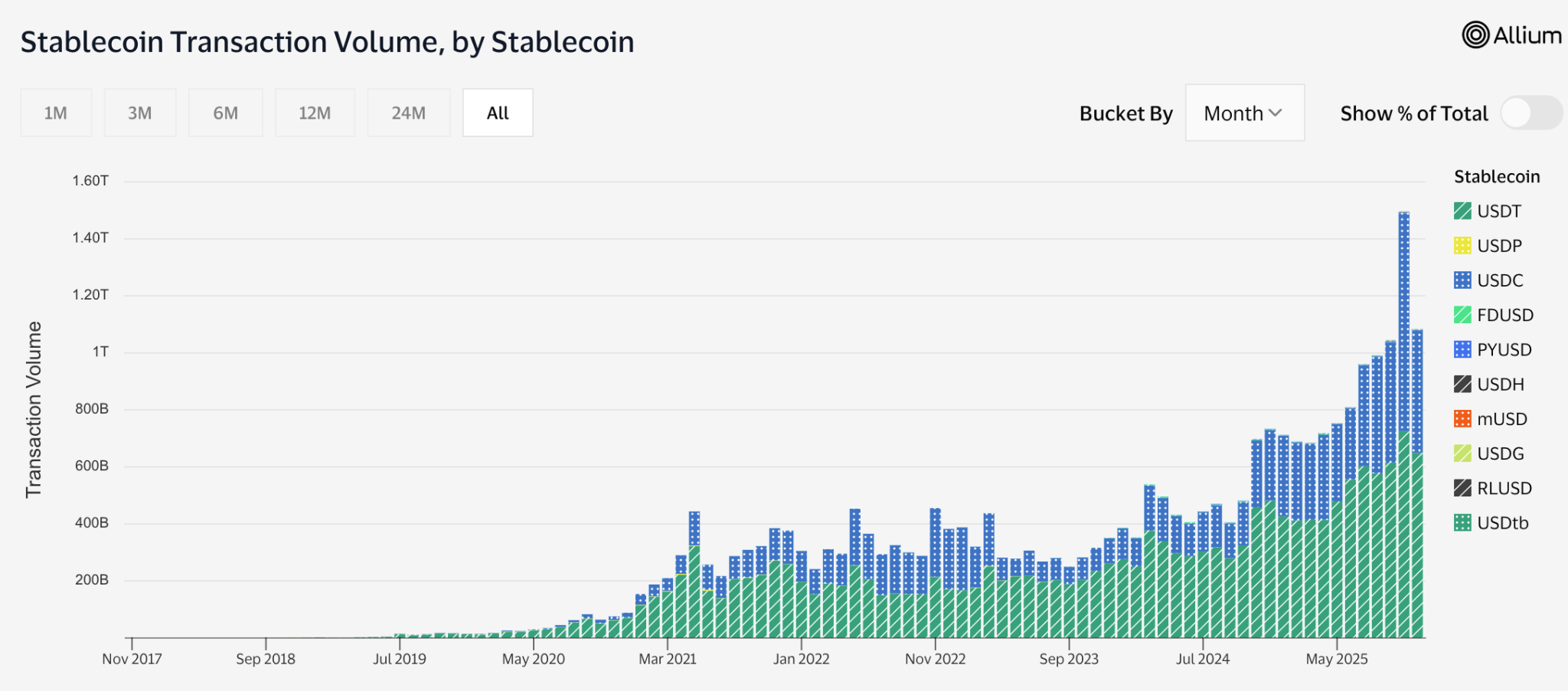
USDT remains the largest stablecoin by far, representing over 60% of the total market value of dollar-pegged tokens. The combined stablecoin market topped $300 billion for the first time last month, underscoring how central these tokens have become for crypto trading, remittances, and decentralized finance (DeFi), which is a set of financial services built on blockchains without banks.
USDT has historically led monthly transaction volumes, with Circles USDC in second place. But last month, USDC briefly took the lead: $764.6 billion in transactions versus $724.8 billion for USDT, according to data from Visa and Allium.
How Tether says its reserves look
Tether, which relocated its base to El Salvador this year, publishes quarterly attestations via audit firm BDO Italia. As of Sept. 30, the company reported $181.2 billion in assets backing $174.4 billion in USDT outstanding, indicating an overcollateralized position at that time.
On its transparency page, Tethers latest breakdown shows 77.23% held in cash, cash equivalents, and short-term deposits. The remainder includes corporate bonds, precious metals, Bitcoin, secured loans, and other investments. Just over 80% of the cash and cash-equivalent bucket is in U.S. Treasury bills.
Why this matters
- For traders: A downgrade highlights potential depeg risk if risk assets in reserves drop quickly. Even if redemptions remain smooth, perceived risk can widen spreads during volatility.
- For exchanges and DeFi apps: Many trading pairs and lending pools rely on USDT liquidity. Any loss of confidence can ripple through pricing, borrowing costs, and collateral rules.
- For the broader market: Stablecoins are cryptos cash rails. Their design and disclosures influence regulators, payment partners, and mainstream adoption.
What to watch next
- Reserve mix: Does Tether reduce Bitcoin or other higher-risk holdings, or boost Treasuries further?
- Transparency: More detail on asset managers and non-Treasury investments could address disclosure concerns.
- Flows: Monitor redemptions and exchange balances for signs of stress, especially during sharp Bitcoin moves.
- Competition: USDCs recent volume lead suggests usage can shift quickly when trust or costs change.
Bottom line
S&Ps tougher stance puts a spotlight on how USDT earns yield and what sits behind the peg. Tethers response shows its not backing down from using a broader reserve mixand, for now, the market isnt blinking.
More data: Explore stablecoin metrics on DeFiLlama and transaction volumes via Visa Onchain Analytics.