
Fidelity's tokenized fund on Ethereum has climbed to $266.2 million, up 15% over the past month, according to RWAxyz. The move underscores how real-world assets (RWAs) like U.S. Treasuries are quickly shifting on-chain.
The product, called Fidelity Digital Interest Token (FDIT), represents tokenized shares of a Fidelity Treasury money market fund. In plain terms, it lets investors gain on-chain exposure to short-term U.S. government debt while the underlying assets remain in traditional custody. The entire offering lives on Ethereum.
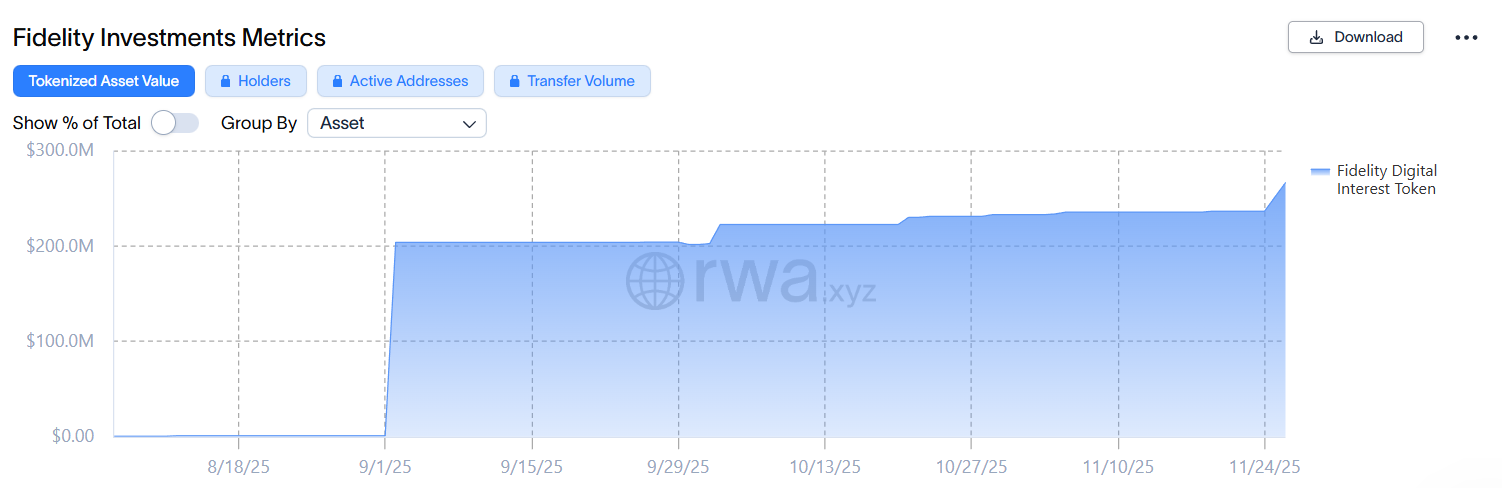
Fidelity's Treasury money market fund. Source: RWAxyz
BlackRock still leads this niche
Fidelity's fast start comes as it joins a crowd led by BlackRock. The asset manager's BUIDL tokenized money market fund remains the category's heavyweight at $2.3 billion in assets. While BUIDL was largely concentrated on Ethereum for much of its growth, its Ethereum share fell by about 60% last month as assets spread across other supported blockchains.
Why this matters
Tokenized funds bring familiar assetslike Treasuriesto the same rails used for crypto. That can mean faster settlement, 24/7 transfers, and software-based access controls. It also opens the door for new uses in Decentralized Finance (DeFi), such as collateral for loans or automated cash management.
For traditional investors, the draw is simple: keep exposure to safe, short-term government debt while tapping the benefits of blockchain plumbing. For crypto-native firms, tokenized Treasuries offer a cash-like asset that can plug directly into on-chain operations.
How tokenized funds work, in simple terms
Think of a token as a digital claim on a share of a traditional fund. The assets, like T-bills,sit with a regulated custodian. Tokens are minted when money comes in and burned when investors redeem. Access usually requires going through the fund manager and passing compliance checks like KYC (know-your-customer).
The bigger picture: RWAs are booming
RWAs on public blockchains now exceed $36 billion in represented value, more than doubling since the start of the year, per RWAxyz. Private credit is the largest slice at about $18.7 billion. Ethereum is still the top chain for these assets, with roughly $11.6 billion, about 63.7% of the sector's total.
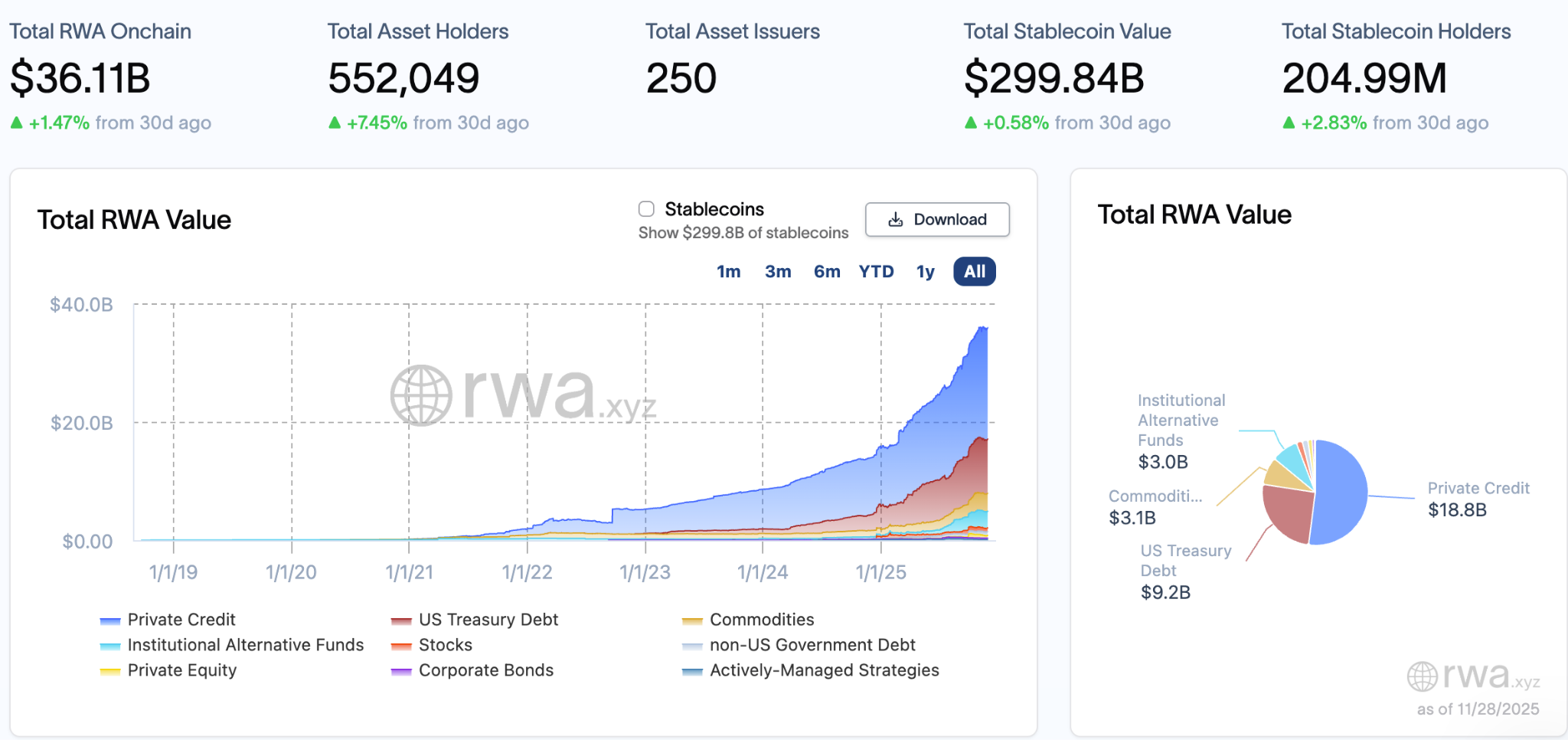
Total on-chain value of RWAs. Source: RWAxyz
What to watch next
- The race among giants: Fidelitys FDIT is gaining traction, but BlackRocks BUIDL still sets the pace.
- Multi-chain expansion: BUIDLs migration hints at a future where tokenized funds live across several networks to reach different users and apps.
- Yield and policy shifts: Changes in interest rates and regulation could speed up or slow down adoption.
- Growth outlook: Oracle provider RedStone sees total on-chain RWA value potentially reaching $60 billion next year. Forecasts arent guarantees, but the direction is clear.
The takeaway
Fidelity crossing the quarter-billion mark on Ethereum shows that RWAs are moving from pilot projects to real scale. If the trend holds, more traditional assetsfrom credit to bondscould be tokenized next, bringing larger pools of capital on-chain and deepening the links between Wall Street and Web3.